

What This Manufacturing Supervisor Leadership Training Covers
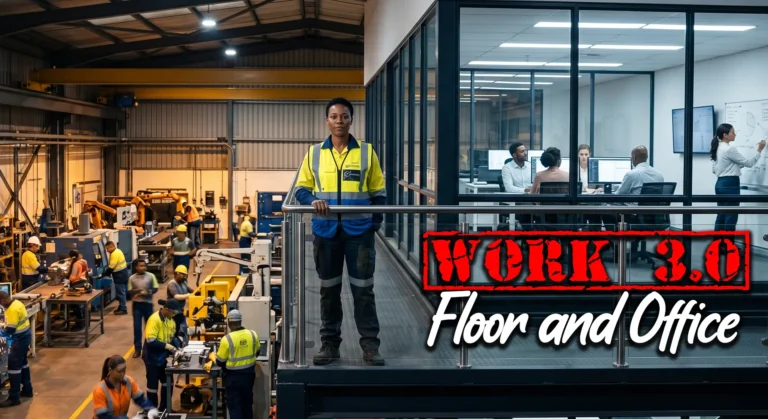
The floor and the office run on different scoreboards and develop different pictures of the same reality. The manufacturing supervisor is the person who either closes that gap or lets it widen. Work 3.0: Floor and Office gives production supervisors, shift leads, and frontline team leads the specific skills to lead well at that intersection. Eight lessons. Named frameworks. A 30-day challenge that turns learning into a real change in how the organization communicates.
- Claim the Role You Were Promoted Into: Being outstanding at the job is not the same as being ready to lead it. This course starts with what actually changed the day you got promoted and why the peer-to-leader transition on the shop floor is harder than anyone told you.
- Protect What Your Floor Knows: The most valuable knowledge in most industrial facilities lives in the heads of the people closest to leaving. This course shows production supervisors how to start the transfer before that knowledge walks out the door.
- Lead Through the In-Between: The structural isolation of the frontline supervisor role is real, it is common, and it is something most supervisory training never names. This course does.
- Translate Between Two Worlds: The floor optimizes for throughput. The office optimizes for margin. This course gives supervisors practical tools to carry the message in both directions in a way that lands and builds credibility on both sides.
- Keep the People Who Keep the Floor Running: Manufacturing turnover is a supervision problem before it is a compensation problem. This course addresses the specific moments that determine whether a good employee stays or quietly makes a different decision.
- Lead Through What the Floor Resists: Change hits the industrial floor faster and harder than almost anywhere else in an organization. This course gives supervisors a structure for leading through resistance without losing production or trust.
- Make Your Team Visible: The work your team does is largely invisible to the people above you. Output shows up. The story behind it does not. This course builds the habit of surfacing what would otherwise go unrecognized, before a crisis makes it urgent.
- Close the Perception Gap: The floor and the office develop different pictures of the same reality. This course ends with a 30-day challenge: notice where those pictures diverge, keep the notes, and bring a briefing to your manager with ideas. Not complaints. Insight.
Who This Frontline Supervisor Training Is For
- New and Experienced Floor Supervisors: Whether you were promoted last quarter or have been leading for years, this course addresses the challenges specific to shop floor leadership that most supervisor training never covers.
- Shift Leads and Production Supervisors: Frontline leaders in fast-paced industrial environments where the floor and the office operate on different priorities and someone has to hold both pictures at once.
- Plant Managers and Operations Leaders: Senior leaders whose supervisory team is absorbing pressure from both directions without translating any of it, and whose floor and office have stopped seeing the same organization.
- Manufacturing HR and L&D Teams: Organizations that have been adapting office-focused leadership training to a floor context and getting partial results because the context is genuinely different.
- Industrial and Skilled Trades Team Leads: Leaders in construction, warehousing, distribution, and skilled trades environments where the same floor-to-office dynamics apply and the same frontline leader development gap exists.
Why This Manufacturing Leadership Framework Works
The Core Problem: Promoted for the Wrong Reasons
Most manufacturing supervisors were not promoted because they were ready to lead. They were promoted because they were outstanding at the job they just left. The promotion changed everything about the role and almost nothing about the training they received. They walked back in through the same door, to the same people, with a completely different job and no framework for doing it.
The result is a supervisor who is managing the floor without managing the relationship between the floor and the office, absorbing pressure from both directions, and hoping the gap closes on its own. It does not. It widens quietly until something breaks.
The Structural Solution: Named Frameworks for the Specific Conditions of Industrial Supervision
Generic supervisory training fails floor supervisors because it was not built for their conditions. The peer-to-leader transition within the same team. The knowledge walking out the door with retiring veterans. The two-scoreboard problem between throughput and margin. These are not challenges that generic management development addresses. Work 3.0 was built around them.
Built on the leadership frameworks Dr. David Arrington has used with executives and supervisors across more than 17 years of coaching and development work, each lesson delivers a named, practical framework grounded in the specific reality of manufacturing and industrial environments. Not theory to translate later. Tools to use before the next shift.
The Outcome: A Supervisor Who Connects the Organization
The goal of this course is a supervisor who understands their role as the connection point between two groups who need each other but do not always understand each other. When that connection is managed well, the floor knows what the business needs, management has an accurate picture of what is actually happening on the floor, problems surface before they become crises, and people stay because they feel seen and supported.
The course closes with a 30-day challenge that is not a task list. It asks supervisors to pay attention to where the floor’s picture and the office’s picture of the same reality diverge, keep notes over 30 days, and bring that picture to their manager as a briefing with ideas. When the supervisor does this job well, both sides understand each other. That is not a small thing. That is everything.
Work 3.0: Floor and Office is included inside the Arrington Coaching Leadership Pipeline Builder Subscription. No per-course fees and no consulting minimums, just immediate access to manufacturing supervisor leadership training built for the environment your supervisors actually work in.
If the gap between your floor and your office is wider than it should be, this is where that changes.
Frequently Asked Questions About Manufacturing Supervisor Training
What makes this different from other manufacturing supervisor training?
Most manufacturing supervisor training covers generic management skills and adapts them to a floor context. Work 3.0 was built specifically for the conditions of industrial supervision: being promoted from within the same team, sitting between two groups with different priorities, and leading people who are watching to see whether the title changed you. The frameworks are named, practical, and designed for the floor, not borrowed from a corporate training catalog.
How do you develop supervisors who were promoted from the shop floor?
Supervisors promoted from the shop floor face a specific challenge: they are doing a fundamentally different job in the same environment with the same people. Effective frontline leader development for this peer-to-leader transition names the patterns supervisors fall into, builds awareness of what changed and what did not, and gives production supervisors practical tools to lead with the credibility they earned on the floor and the new behaviors the role requires.
How do you improve communication between the production floor and management?
The floor optimizes for throughput. Management optimizes for margin. Those are different scoreboards and they produce different pictures of the same reality. Improving floor-to-office communication requires a supervisor who can translate deliberately in both directions: taking floor problems to management in language that gets heard, and taking management directives to the floor with enough context that the team can understand and act on them. Work 3.0 teaches both directions as specific skills.
How do you reduce turnover in manufacturing and industrial environments?
Frontline turnover in manufacturing is primarily a supervision problem, not a compensation problem. Gallup research shows that managers account for at least 70 percent of the variance in employee engagement scores. Retention is built in two-minute conversations every shift: how a supervisor responds after a mistake, whether they acknowledge when something goes right, and whether team members feel heard when they bring a problem. Supervisors with these skills retain more people. Those without them watch good employees make quiet decisions that show up as resignations.
What is knowledge transfer in manufacturing and why is it a leadership problem?
Knowledge transfer in manufacturing refers to moving critical operational knowledge from experienced workers to newer ones before it leaves the organization. The most valuable knowledge on most floors is tacit: the feel of a machine running slightly off, the judgment call built over decades, the ability to read a floor before anyone says a word. Research suggests tacit knowledge can represent up to 70 percent of an organization’s knowledge assets. It does not transfer automatically. A supervisor has to create the conditions and the conversations that make it move.
Is this manufacturing leadership training suitable for both new and experienced supervisors?
Yes. New production supervisors benefit most from the identity and communication foundations in the early lessons. Experienced supervisors often find the most value in the advocacy and perception gap content, which names dynamics they have lived with for years but never had language or tools for. The course is self-paced online delivery, so supervisors can work through it on their schedule regardless of experience level.
How do frontline supervisors advocate for their team to management?
Most manufacturing supervisor training and production supervisor development programs teach downward leadership only. Work 3.0 addresses the upward relationship directly: how to make your team’s contributions visible to the people above you, how to advocate for your people in rooms they cannot enter, how to develop the organizational fluency that changes how you are seen, and how to have a direct conversation with your manager about where you are trying to go professionally. These are skills most frontline leaders were never taught.
What is the difference between the floor supervisor role and middle management?
The manufacturing supervisor is often described as middle management, but that framing makes the position sound like a problem to be managed. The supervisor is the connection point between two groups with different agendas, different scoreboards, and different pictures of the same reality. When the supervisor leads well, both sides understand each other. Problems surface before they become crises. The floor knows what the business needs. Management has an accurate picture of what is actually happening. That is not a middle position. That is the center of how the organization actually works.
How quickly can I start applying this training with my team?
Immediately. Every lesson includes a Your Next Shift action, a specific behavior to apply before the next shift ends. The course closes with a 30-day challenge that gives supervisors one concrete task: track where the floor’s picture and the office’s picture of the same reality diverge, then bring a briefing to their manager with ideas. Not theory to translate later. Practice that starts with the next shift.